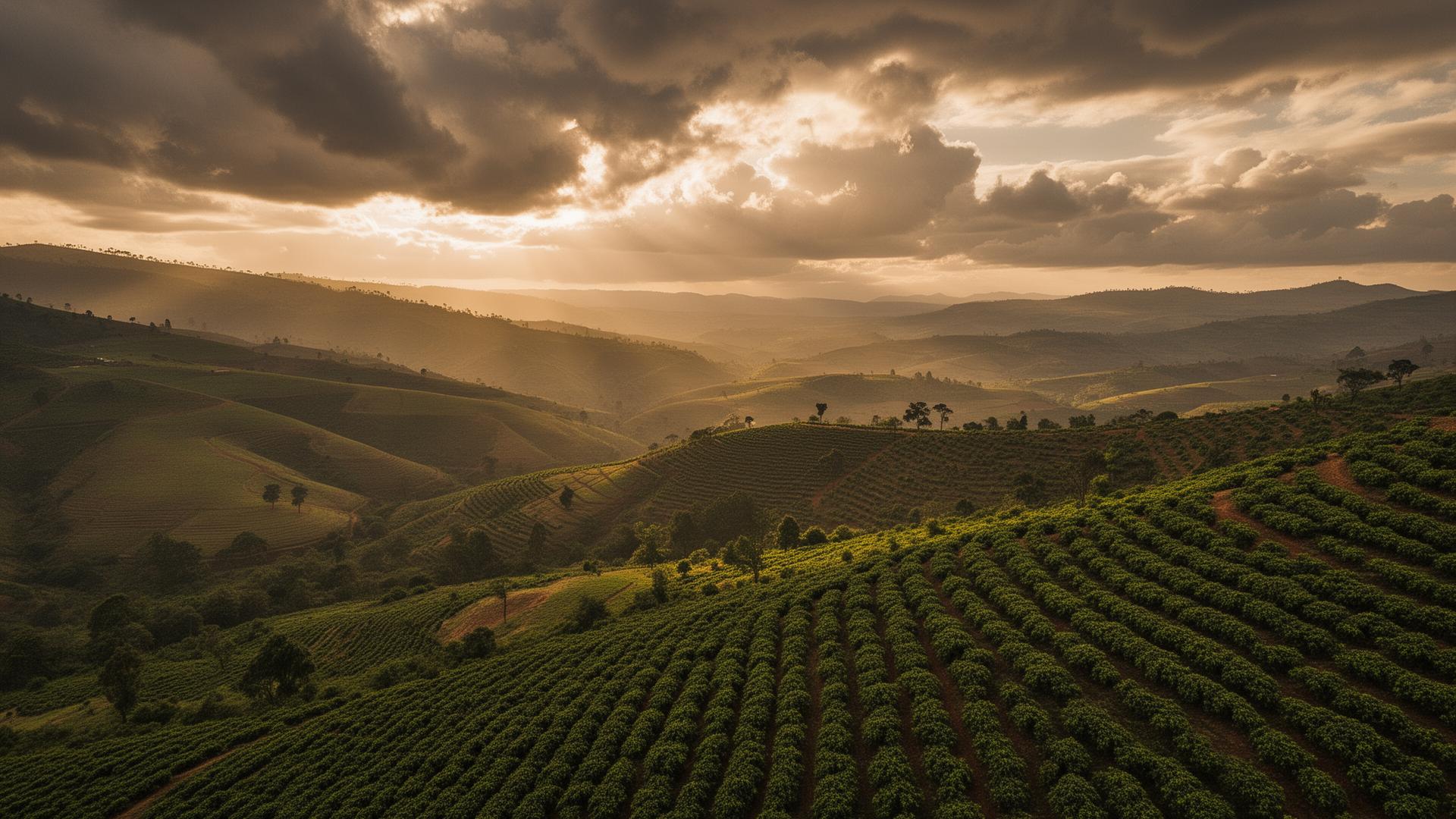
EUDR and Ethiopian Coffee: A Complete Compliance Guide for Buyers
Everything European coffee importers and roasters need to know about the EU Deforestation Regulation and how we meet it
What Is the EU Deforestation Regulation (EUDR)?
The EUDR (Regulation 2023/1115) requires all coffee imported into the EU to be proven deforestation-free, with GPS-referenced production data, supply chain documentation, and a due diligence statement. It applies to all Ethiopian coffee entering the EU market. We provide full EUDR-compliant documentation for every lot.
The EU Deforestation Regulation (EUDR, Regulation 2023/1115) requires all operators placing coffee, cacao, wood, soy, palm oil, and other commodities on the EU market to prove that their products were not produced on land deforested after December 31, 2020.
The EUDR was adopted by the European Parliament and Council in June 2023 as a cornerstone of the EU's Green Deal strategy to reduce the Union's contribution to global deforestation. It replaces the earlier EU Timber Regulation and significantly expands the scope of commodities covered and the obligations on operators and traders.
The regulation applies to seven commodity groups: cattle, cocoa, coffee, oil palm, rubber, soya, and wood. For coffee, it covers green beans, roasted coffee, and coffee-containing products. All operators placing these commodities on the EU market — or exporting them from the EU — must exercise due diligence to ensure the products are deforestation-free and produced in compliance with the legislation of the country of origin.
Critically, the EUDR requires geo-referenced data — GPS polygon or point coordinates — for every production plot. This is the most technically demanding requirement for coffee supply chains and the area where Ethiopian exporters must demonstrate the strongest capabilities.
What EUDR Means for Ethiopian Coffee Buyers
If you import Ethiopian coffee into the European Union, the EUDR creates direct legal obligations for your business. As the "operator" placing the product on the EU market, you bear primary responsibility for exercising due diligence and submitting a due diligence statement via the EU Information System before the product clears customs.
Your due diligence statement must confirm that you have collected the required information — including geo-referenced coordinates of the production plots — assessed the risk of deforestation and illegality, and taken steps to mitigate any identified risks. You must retain this documentation for five years and make it available to competent authorities on request.
Risk of non-compliance
Products that do not meet EUDR requirements cannot enter the EU market. Non-compliant shipments may be detained, seized, or returned at the operator's cost. Operators face financial penalties proportionate to the environmental damage and the value of the goods, and may be temporarily excluded from public procurement processes.
What you must require from your Ethiopian supplier includes: GPS coordinates for production plots, a deforestation-free declaration with supporting evidence, supply chain documentation linking the exported lot to identified producers or washing stations, harvest dates, processing records, and legal compliance documentation including Ethiopian export licensing.
Key Compliance Dates
- December 30, 2024: Large operators and traders must comply
- June 30, 2025: SME operators and traders must comply
How We Comply: Origin Ethiopia's EUDR Position
We have invested in building a comprehensive traceability and compliance infrastructure specifically designed to meet the requirements of the EUDR. Our systems enable European buyers to source Ethiopian specialty coffee with full confidence that their regulatory obligations can be met.
GPS-Referenced Farm Data
Every lot includes GPS point coordinates or polygon data for the production plot. We map washing station catchment areas and individual farm plots using mobile data collection tools, verified against satellite imagery.
Satellite Deforestation Monitoring
We cross-reference production plot coordinates against Global Forest Watch and Copernicus satellite data to verify that no deforestation has occurred on the plot after the December 31, 2020 cut-off date.
Due Diligence Documentation Pack
We provide a complete documentation package for every shipment that meets the requirements of Article 4 of the EUDR. This includes geo-referenced data, producer information, harvest dates, processing records, and our deforestation-free declaration.
Lot-Level Traceability
Each bag of coffee is traceable to a specific lot, linked to a specific washing station or farm, with a recorded processing method, harvest date, and quality assessment. Our traceability chain is unbroken from cherry intake to export.
Third-Party Verification
Our traceability and deforestation-free claims are subject to independent verification. We work with accredited auditing bodies and provide access to our documentation for buyer due diligence processes.
EUDR Documentation Checklist
Use this checklist to verify that your Ethiopian coffee supply chain documentation meets EUDR requirements. Every item below is included in our standard documentation package for EU-bound shipments.
Download Full EUDR Checklist (PDF)- 1Geo-referenced GPS coordinates (polygon or point) for each production plot
- 2Deforestation-free declaration with satellite-verified evidence
- 3Supply chain mapping from farm/washing station to export
- 4Producer identity verification (farm or cooperative registration)
- 5Harvest date and lot ID linkage for every bag
- 6Processing station records with intake and outtake documentation
- 7Export certification from Ethiopian Coffee and Tea Authority
Ethiopia-Specific EUDR Context
Ethiopia occupies a unique position in the EUDR landscape. As the birthplace of Arabica coffee and the largest coffee producer in Africa, the country's compliance posture has significant implications for the global specialty coffee trade. Understanding Ethiopia's specific context is essential for EU buyers building EUDR-compliant supply chains.
Forest Cover and Deforestation Monitoring
Ethiopia has experienced historical forest loss, primarily driven by agricultural expansion, but the specialty coffee-growing regions present a different picture. The highland coffee zones of Guji, Yirgacheffe, Sidama, and Limu are characterised by established smallholder farming systems where coffee has been cultivated for decades — in many cases, centuries. These are not frontier agricultural zones; they are mature production landscapes with stable land use patterns.
The Ethiopian government, with support from international partners, has invested in national forest monitoring systems including the NFMS (National Forest Monitoring System) and participates in the REDD+ programme. Satellite data from Global Forest Watch and the EU's Copernicus programme can be used to independently verify forest cover status on production plots.
Gedeo Agroforestry: Inherently Deforestation-Free
The Gedeo zone — which includes the world-famous Yirgacheffe coffee origin — is a UNESCO-recognised cultural landscape based on indigenous agroforestry practices. Coffee in this region is grown under a diverse canopy of native trees in a system that actively maintains and enhances forest cover. This multi-strata agroforestry system is inherently deforestation-free and represents one of the most sustainable coffee production models in the world.
Key insight for EU buyers: Ethiopian specialty coffee origins — particularly Yirgacheffe, Guji, and Sidama — are among the lowest-risk coffee origins globally for EUDR deforestation concerns, due to their established agroforestry systems and long-standing agricultural use.
Ethiopian Coffee and Tea Authority
The Ethiopian Coffee and Tea Authority (ECTA) oversees coffee quality control, export licensing, and traceability at the national level. All Ethiopian coffee exports are processed through the ECX (Ethiopia Commodity Exchange) or direct specialty trade channels, both of which maintain documentation trails. ECTA's licensing and quality control processes provide an additional layer of legal compliance verification that supports EUDR requirements.
Why Ethiopian Specialty Coffee Is Well-Positioned
Compared to some other coffee origins where large-scale plantation expansion poses deforestation risks, Ethiopian specialty coffee production is overwhelmingly smallholder-based, shade-grown, and integrated into diverse agroforestry systems. The combination of established land use, traditional farming practices, government oversight through ECTA, and the growing investment in traceability infrastructure makes Ethiopian specialty coffee one of the most EUDR-compatible origins in the global market.
Frequently Asked Questions
What is the EUDR?
The EU Deforestation Regulation (EUDR, Regulation 2023/1115) is a European Union law that requires all operators and traders placing certain commodities — including coffee — on the EU market to demonstrate that their products are deforestation-free and legally produced. It was adopted in June 2023 and applies to products produced on land that was not subject to deforestation after December 31, 2020. The regulation requires geo-referenced data for production plots, supply chain documentation, and a due diligence statement submitted via the EU Information System.
Does EUDR apply to Ethiopian coffee?
Yes. The EUDR applies to all coffee imported into the European Union, regardless of origin. Ethiopian coffee entering the EU market — whether as green beans, roasted coffee, or coffee products — must be accompanied by documentation proving it is deforestation-free and legally produced. Ethiopia is classified as a 'standard risk' country under the EUDR benchmarking system, which means standard due diligence requirements apply to all Ethiopian coffee imports.
What GPS data do you provide with each lot?
We provide GPS point coordinates (latitude and longitude) for washing stations and, where available, polygon coordinates for individual farm plots. For smallholder lots aggregated at washing stations, we provide the GPS coordinates of the washing station along with a catchment area map identifying the farms within the station's supply network. This data meets the geo-referencing requirements of Article 9 of the EUDR.
How do I verify EUDR compliance before I place an order?
You can request our EUDR Documentation Pack before placing an order. This includes sample traceability documentation, our deforestation-free declaration template, and GPS data for available lots. We also provide access to our satellite monitoring evidence and can arrange a call with our compliance team to walk through the documentation. Contact us at compliance@originethiopia.com or use our sample request form.
What happens if my supplier cannot provide EUDR documentation?
Under the EUDR, operators placing coffee on the EU market are legally required to exercise due diligence and submit a due diligence statement via the EU Information System. If your supplier cannot provide the required documentation — including geo-referenced coordinates, deforestation-free evidence, and supply chain records — you cannot legally import that coffee into the EU. Non-compliant shipments may be detained, seized, or returned, and operators may face financial penalties.
Is Ethiopian coffee at risk of deforestation issues under EUDR?
Ethiopia has a complex landscape, but the specialty coffee regions — particularly Guji, Yirgacheffe, Sidama, and Limu — are predominantly characterised by long-established smallholder farming and traditional agroforestry systems. The Gedeo zone (including Yirgacheffe) is a UNESCO-listed agroforestry landscape that is inherently deforestation-free. While vigilance is required, Ethiopian specialty coffee origins are generally well-positioned for EUDR compliance due to their established agricultural use and traditional cultivation methods.
What is the EUDR compliance deadline for coffee importers?
The EUDR compliance obligations began on December 30, 2024 for large operators and traders. Small and medium-sized enterprises (SMEs) have until June 30, 2025 to comply. From these dates, all coffee placed on the EU market must be accompanied by a due diligence statement confirming deforestation-free status and legality. Operators should be preparing now to ensure their supply chains meet these requirements.
Do you provide a due diligence statement for EU import?
We provide all the documentation you need to prepare your due diligence statement, including geo-referenced production data, deforestation-free evidence, legal compliance records, and supply chain documentation. While the legal responsibility for the due diligence statement rests with the EU operator placing the product on the market, our documentation package is designed to provide all the evidence required to complete the statement with confidence.
What is geo-referencing and why does it matter for EUDR?
Geo-referencing is the process of recording the GPS coordinates of the land where a commodity was produced. Under the EUDR, operators must provide geo-referenced location data for every plot of land where the coffee was grown. For plots under 4 hectares, a single GPS point coordinate is sufficient. For larger plots, polygon data (a series of coordinates defining the plot boundary) is required. This data enables satellite-based verification that no deforestation has occurred on the production land since December 31, 2020.
Can you provide EUDR documentation for existing orders?
Yes. If you have existing orders or are working with coffee that was sourced from us, we can provide retrospective EUDR documentation packages for those lots. Our traceability system maintains historical records for all shipments. Contact our compliance team to discuss specific lot documentation needs.
Questions About EUDR Compliance?
Our compliance team is ready to help you navigate EUDR requirements for Ethiopian coffee sourcing. We can provide documentation samples, answer technical questions, and support your due diligence process.